
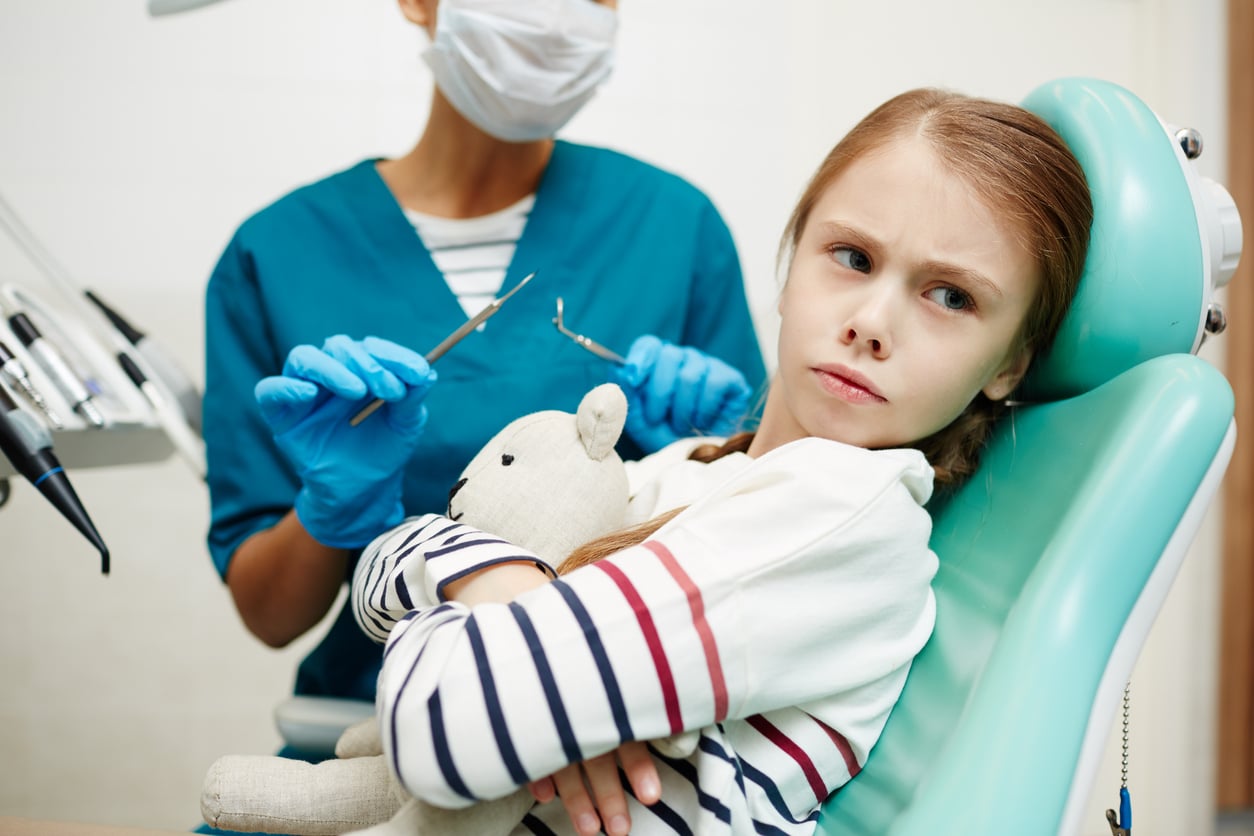
| Quick Answer: Dental anxiety is one of the most common worries in kids, and it’s almost always solvable. Kid-focused dentists use behavior guidance techniques like tell-show-do, distraction, and gradual exposure that work for the vast majority of children. At home, parents can help by reading dental-themed books, scheduling morning appointments, avoiding scary words (“shot,” “hurt”), and keeping their own anxiety hidden. For high-anxiety cases, sedation options — nitrous oxide, oral sedation, or IV sedation — let kids get treatment without trauma. |
If your child panics at the thought of a dental visit — or you’ve already had a tough appointment that left them nervous — you’re dealing with a really common challenge. At Just For Grins Pediatric Dentistry, we work with anxious kids in Santa Fe every single day. The honest truth: dental anxiety is fixable, but it takes the right approach.
Here’s what works at home, what pediatric dental teams do at the office, and when to ask about sedation options.
Why Kids Are Afraid of the Dentist
Anxiety almost always has a cause. Common ones:
- A prior bad experience (medical or dental)
- Fear of the unknown (sounds, smells, instruments)
- Sensory sensitivity (lights, sounds, mouth touch)
- Picking up on a parent’s own dental anxiety
- A scary story heard from a sibling, friend, or media
- Fear of pain — even from things that don’t hurt
- Loss of control during the exam
Knowing the cause helps you choose the right tactic.
What Parents Can Do at Home
The week before the appointment matters more than the appointment itself.
Read books about dental visits. Show Me Your Smile! Trip to the Dentist, The Berenstain Bears Visit the Dentist, Just Going to the Dentist by Mercer Mayer. Public libraries usually carry several.
Watch friendly videos. Daniel Tiger and Sesame Street both have gentle dental visit episodes. Avoid anything that frames dentistry as scary or painful.
Play dentist with stuffed animals. Take turns “checking” each other’s stuffed animals’ teeth. Use the role-play to introduce instruments — a toothbrush, a small mirror, a flashlight.
Schedule the right appointment time. Mornings work best for most kids — they’re rested, fed, and not yet overwhelmed by the day.
Avoid these words. “Shot,” “hurt,” “pain,” “pull,” “drill,” “scary,” “needle.” Even “it won’t hurt” plants the idea. Pediatric dental teams use kid-friendly substitutes (“sleepy juice,” “Mr. Whistle,” “tooth pillow”).
Hide your own dental anxiety. Kids read parental tension. If you tense up walking into the office, they will too. Take a deep breath in the parking lot.
Don’t bribe with sugar after. This is paradoxical at a dental visit and undermines the lesson. A small non-food reward (a toy, a sticker, a movie night) is fine.
What Pediatric Dental Teams Do
Pediatric dental specialty training includes specific behavior guidance techniques. The standard ones:
- Tell-show-do. Tell what’s going to happen in simple words. Show with a finger, mirror, or stuffed animal. Do it slowly. This is the single most-used technique in pediatric dentistry.
- Voice control and pacing. Slow, calm voice. Small steps. Lots of encouragement.
- Distraction. In-chair TVs, music, conversation about preferred topics, counting games.
- Positive reinforcement. Celebrating every small step (“You opened wide for 5 seconds! Awesome!”).
- Parent presence. At our practice, parents are always welcome in the treatment room.
- Knee-to-knee exam for very young kids. Parent and dentist sit knee-to-knee with the toddler reclining across both laps. Less threatening than the big chair.
If a child still won’t cooperate, a dentist won’t force it. We may shorten the appointment, focus on parent education, and try again at the next visit. Forcing creates lifelong dental fear — our child-centric dentists know this and avoid it.
When to Ask About Sedation Options
For some kids, behavior guidance alone isn’t enough. That’s where sedation dentistry comes in.
| Sedation Type | What It Does | When It’s Used |
|---|---|---|
| Nitrous oxide (“laughing gas”) | Light, conscious calm; wears off in minutes | Mild anxiety, routine procedures |
| Oral sedation | Liquid medication; deeper relaxation | Moderate anxiety, longer treatment |
| IV sedation | Sleep-like state; fully monitored | High anxiety, complex cases, special needs |
| General anesthesia (hospital) | Asleep; comprehensive treatment | Extensive treatment, very young or medically complex kids |
A dentist trained and certified in sedation will recommend the lightest option that works. Most anxious kids do well with nitrous oxide for routine treatment.
Visit Just For Grins
Our Santa Fe dental practice is designed to feel welcoming, not clinical. Our team handles dental anxiety, sensory issues, and special-needs care every day. Schedule a visit — even just to walk through the office and meet the team. We accept Medicaid and most insurance plans.
Frequently Asked Questions
What can I do if my child is afraid of the dentist?
Read dental-themed books at home, schedule morning appointments, avoid scary words like “shot” or “pain,” play dentist with stuffed animals, and hide your own anxiety. At the office, pediatric dental teams use behavior guidance techniques specifically designed for anxious kids.
Is it normal for kids to be scared of the dentist?
Yes — extremely normal. Studies estimate 10–20% of children have meaningful dental anxiety at some point. Most outgrow it with consistent, positive experiences at a kid-focused dental practice.
At what age should I ask about sedation for my child?
There’s no minimum age — sedation can be appropriate at any age when the alternative is forcing treatment. Talk to your dentist if behavior guidance alone hasn’t worked, or if your child has had a bad prior experience, sensory issues, or extensive treatment needs.
How do I find a dentist that’s good with anxious kids?
All good dentists for kids are trained in behavior guidance. Beyond that, look for offices designed for kids (kid-friendly decor, in-chair TVs, calm staff), reviews mentioning anxious kids specifically, and a willingness to do a free “meet the team” visit before any treatment.
Should I tell my child about the dentist visit ahead of time?
Yes — but keep it factual and short. “We’re going to see the dentist tomorrow morning. They’ll count your teeth and clean them.” Don’t over-explain or build it up. Too much warning can create anxiety. A book or short video is helpful, but lengthy preparation is not.
What if my child has had a bad dental experience already?
Tell the new dental office before the visit. Pediatric dental teams handle this often — they’ll usually slow down, do a “happy visit” first (no treatment, just meeting the team and seeing the chair), and use sedation if needed for any treatment. The vast majority of kids recover from one bad experience with the right next visit.
|
Dental anxiety in your family? We truly care about your child’s health and happiness. Reach out to get your child’s appointment scheduled. We can’t wait to see you. Just For Grins Pediatric Dentistry │ Santa Fe, NM │ Contact Us → |